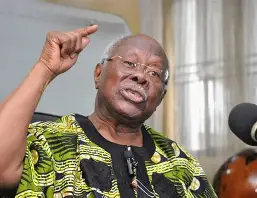
“Days of Lying Are Over” – Bode George Challenges President Tinubu on Missing Educational Records
In a fiery intervention that has once again thrust Nigeria’s long-running educational credentials debate into the spotlight, Chief Bode George, a prominent Lagos politician and former military administrator, has publicly challenged President Bola Ahmed Tinubu to produce authentic certificates from his primary school, secondary school, and university education.
The comments, delivered in a recent Arise TV interview and now circulating widely on social media, revive a controversy first aggressively pursued by the late legal giant Gani Fawehinmi more than two decades ago.
Speaking with characteristic bluntness, the elder statesman declared he would “bet any amount of money” that Tinubu does not possess genuine certificates.
He specifically demanded the production of documents from Children’s Home School and Government College, Ibadan—institutions Tinubu has previously linked to his early education—as well as proof of his university attendance.
George argued that anyone who truly attended these schools would have classmates and verifiable records to show and that the era of “lying and telling a load of bull” is over.
The timing of George’s remarks is significant. Just days earlier, the Independent National Electoral Commission (INEC) published the personal and academic details of candidates for the 2027 presidential election.
Tinubu’s EC9 form lists a 1979 Bachelor of Science degree from Chicago State University but contains no entries for primary or secondary education. By contrast, other candidates provided fuller educational histories.
The discrepancy has fueled renewed public scrutiny online and in political circles.
This is not new terrain. In 1999, Gani Fawehinmi, the renowned human rights lawyer, sued Tinubu over alleged false claims in his INEC forms, including attendance at Government College Ibadan and the University of Chicago (later clarified as Chicago State University).
The case wound its way through the courts and was ultimately dismissed on technical grounds rather than on the substantive merits of the allegations.
Fawehinmi’s relentless pursuit of transparency on the matter remains a landmark in Nigeria’s political accountability struggles.
Chief Bode George, a self-described “bonafide born and bred son of Lagos,” framed his intervention as a continuation of that unfinished business.
As a major figure in the Peoples Democratic Party and a long-time critic of Tinubu’s political machine in Lagos, George’s words carry weight among sections of the opposition and civil society that have never fully accepted the resolution of the certificate question.
Supporters of the President dismiss the latest round of criticism as recycled politics timed to distract from governance.
They point to the Chicago State University certificate that Tinubu has previously presented and note that earlier legal challenges failed to unseat him.
Critics, however, argue that the absence of primary and secondary records on the latest INEC form, combined with George’s pointed challenge, keeps legitimate questions of transparency alive — especially as Nigeria heads toward another presidential contest in 2027.
For ordinary Nigerians, the debate is more than archival drama. It touches on deeper issues of trust, elite accountability, and the standards expected of those who seek the highest office.
Whether Bode George’s intervention will force new disclosures or simply fade into the noise of political season remains to be seen.
What is clear is that the ghost of Gani Fawehinmi’s unfinished lawsuit continues to haunt the conversation around Nigeria’s most powerful man.
 news
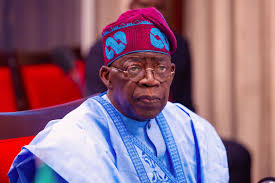
news Presidency Brands Economist’s Tinubu Hate Claim Intellectual Fraud as Reforms Push On
 world
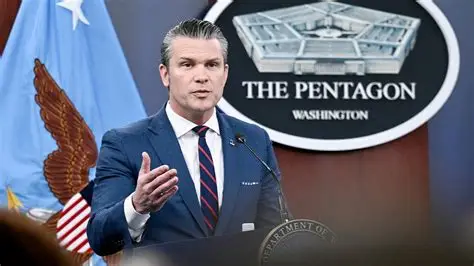
world Hegseth Declares Commanders Back in Charge with Major IG Reforms Across War Department
 news
news Suspected Cattle Rustlers Injure Youth in Isolated Bokkos Attack as Plateau Troops Respond
 world
world Trump Credits US Forces as Dozens of Iranian Terror Leaders Sent Straight to Hell
 politics
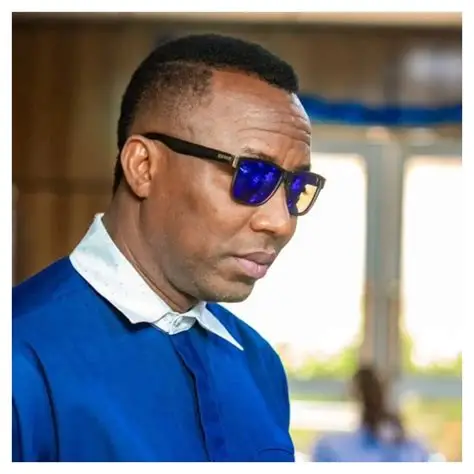
 Sowore Demands ₦500,000 Wage for INEC Staff, Threatens 2027 Election Boycott
How do you feel about this news?
Community Additions
Have a news tip, correction, or extra context about this story? Post it below instantly. All submissions appear live on this screen immediately.